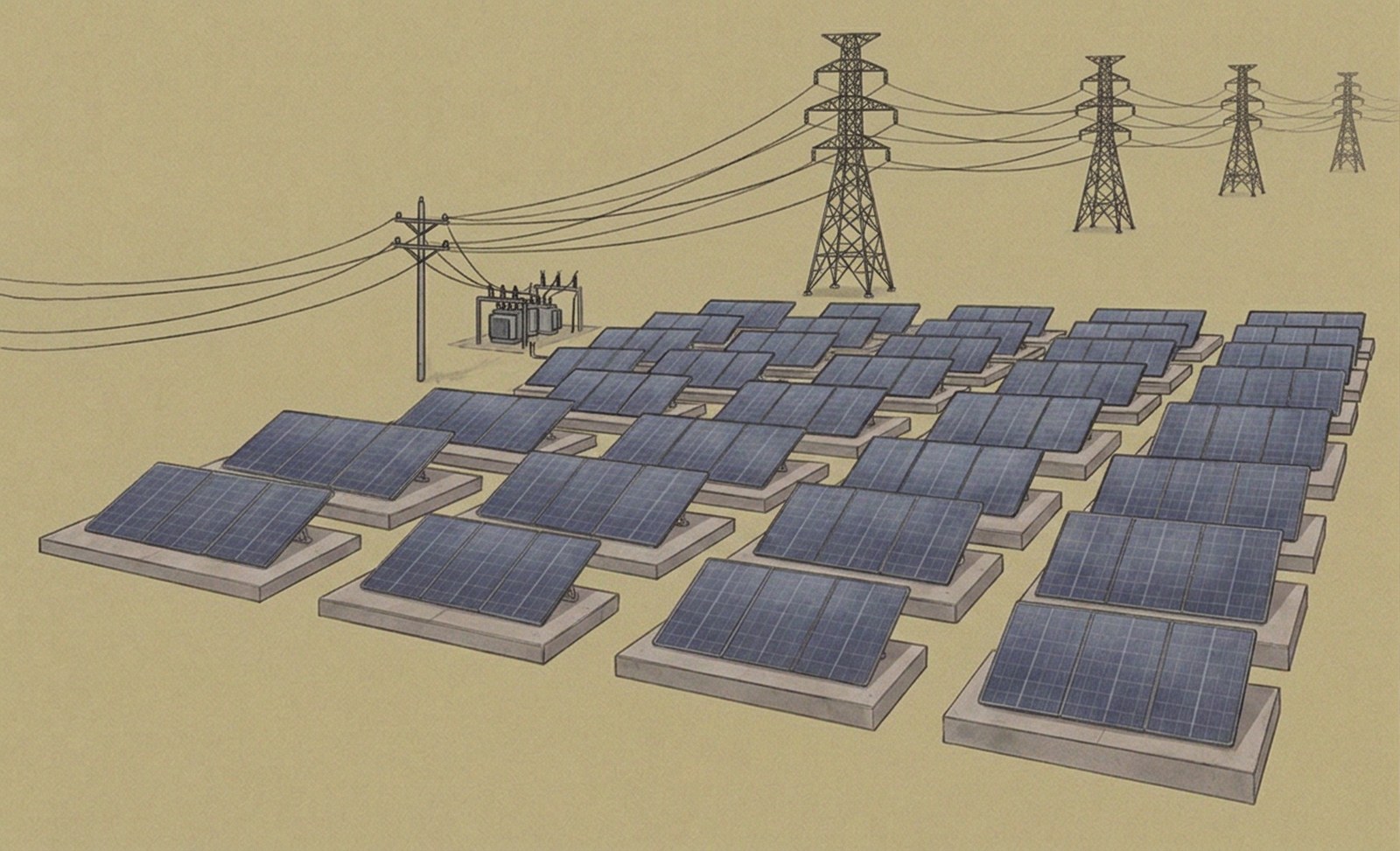
Mexico's power gap is a financing opportunity dressed as an energy problem
Mexico must add nearly a third of its installed capacity within five years. When the constraint is capital rather than technology, the constraint is the opportunity.
Sources: PLADESE 2025-2039 / IMCO; Comision Nacional de Energia, 2025; Secretaria de Energia, 2026. Figures cited are the most recent available at the time of writing and are provided as context, not as investment advice.
The single most important number in the Mexican energy sector is a race against time. Between 2023 and 2024, electricity demand grew 2.3% while installed capacity grew just 1.7%, according to the government's new PLADESE 2025-2039 plan, which projects demand will keep expanding near 2.5% a year for the next fifteen years, broadly in line with GDP growth. Closing that gap requires adding 29,074 megawatts of new generation capacity by 2030, nearly a third of what the system has installed today. That kind of structural shortfall does not resolve itself through pricing alone. It resolves through investment, and the question for an allocator is which point in the capital structure offers the best risk-adjusted way to fund it.
The instinctive answer, owning large generation plants, is the capital-intensive and slow one, and it now sits inside a state-dominated market where the CFE holds just over its 54% generation target. The more agile position is further down: financing distributed generation, the commercial and industrial rooftop solar and storage systems that companies install to escape a saturated grid. This segment is compounding quickly. Distributed generation capacity surpassed 4,500 MW by mid-2025, more than 95% of it solar, according to Mexico's National Energy Commission. It is growing from a real base, at speed, and it is under-served by conventional lenders.
The financial structure of these projects is what makes them investable at scale. Utility-scale and commercial renewable projects in Mexico are typically financed with 20-30% equity and 70-80% debt, underpinned by long-term power purchase agreements that can run as long as twenty-five years under the government's new framework. A well-structured PPA converts a solar installation into something close to a contracted annuity: the offtaker commits to buy the power, the financier captures a predictable long-dated cash flow, and the credit risk reduces to the offtaker's ability to pay. For a lender or a mezzanine provider, that is an attractive place to sit, senior to the equity and secured against a real, cash-generating asset.
The risks require respect. Offtaker credit quality is the central variable, because the entire structure depends on the counterparty honoring the PPA, which places diligence on the commercial and industrial customer at the heart of underwriting. Regulatory risk in Mexican energy is real and has been volatile, so the ability to structure around policy uncertainty is a genuine differentiator. And the floating-rate financing that often accompanies these projects raises the debt-service burden as rates rise, which means the underwriting must stress the project's coverage through a cycle, not merely at close. These are not reasons to avoid the sector. They are the reasons the return premium exists.
The macro case sharpens the point. The same reshoring wave that is drawing manufacturing to Mexico is the wave that is straining the grid, which means energy has moved from an operational detail to a binding constraint on national growth. Capital that helps relieve that constraint earns both a return and a strategic position, and with public budgets tightening, private capital is not optional. It is the mechanism by which the gap gets closed.
We are not betting that the energy transition will happen; it is already happening. We are underwriting the far more tractable proposition that a country whose own plan calls for adding nearly a third of its installed capacity within five years will pay, through contracted, secured structures, for the capital that helps close the difference.
At MountainStone we build and invest in opportunities like this one. If you are developing, offtaking, or financing in this space, we would welcome the conversation.